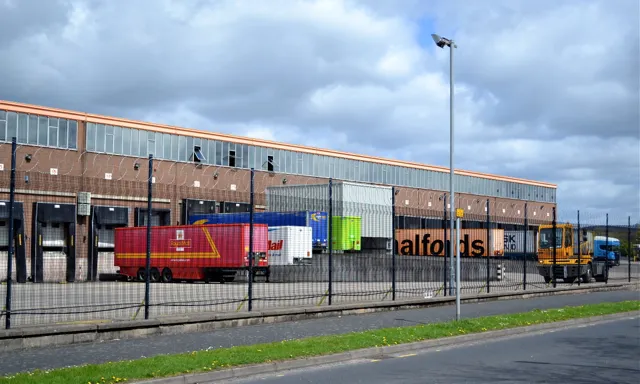
Tight Benches, Thin Margins: Why Scotland's Warehouse Skills Gap Won't Close Itself in 2026
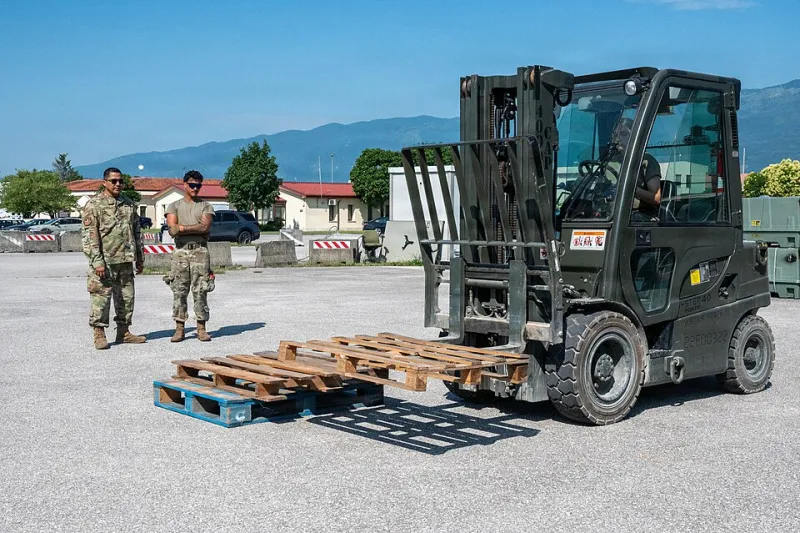
Photo: U.S. Air National Guard photo by Airman 1st Class Jacob Hreshchyshyn, Public domain, via Wikimedia Commons
There is a comfortable story told about the warehousing labour market: that the shortages of the past few years were a post-pandemic distortion, that pay has adjusted, and that the problem is broadly solved. On the evidence of Scottish sites in 2026, that story is wrong. The gap has narrowed at entry level in the Central Belt and widened almost everywhere else, and it has become most acute in the three roles that hold an operation together — the counterbalance operator, the shift supervisor and the maintenance technician.
We should be honest about what has changed. Demand for warehousing space across the Central Belt corridor from Motherwell to Grangemouth has grown steadily, and large distribution sites continue to draw from the same shallow pool as everyone else. Meanwhile the demographic profile of the existing workforce has aged, and the pool of experienced candidates has not been replenished at anything like the rate needed. This is a structural problem dressed up as a seasonal one, and it will not resolve itself.
A licence is not a skill
Forklift recruitment exposes the flaw in most workforce planning. Adverts ask for a counterbalance licence; what the operation actually needs is someone who can work a narrow aisle at pace without damaging racking, handle a mixed inbound trailer, understand load stability, and do it safely at the end of a ten-hour shift. A three-day novice course produces a licence. It does not produce that person.
The consequence is a market in which experienced operators can move for a modest uplift and will. Employers then respond with agency cover, which is expensive, inconsistent on quality and does nothing for the accident rate. The alternative is unfashionable but effective: pay for structured internal progression. Novice-to-experienced pathways, in-house instructor capability under an accredited body, refresher training scheduled on a fixed cycle rather than scrambled after an incident, and cross-training into reach trucks and order pickers so that your cover does not collapse when one person is off. Where this has been done well, the cost per competent operator falls sharply — it is simply spread over eighteen months instead of appearing as a single recruitment invoice.
The supervisor bench nobody built
The harder and more expensive shortage sits one rung up. Shift supervisors come from the floor, which means they inherit a team, a set of KPIs and a disciplinary process with no formal preparation for any of it. The best operators are not automatically the best managers, and promoting on availability rather than aptitude is how sites end up with a supervisor who can run a pick face but cannot hold a difficult conversation.
Building a bench is a deliberate act. Identify people early — long before the vacancy appears — and give them a structured route: a recognised first-line management qualification, an IOSH or equivalent health and safety grounding, shadowing across shifts, a formal mentoring arrangement and a defined set of responsibilities they own while still on the floor. Partnership with colleges such as Forth Valley, New College Lanarkshire or Fife College, and with the professional bodies serving logistics, gives that route credibility and a certificate at the end of it. The payoff is not only succession. Supervisors who understand why a process exists tend to be the ones who improve it.
Technicians are the hardest gap of all
The maintenance technician shortage is where the sector's ambition and its capability are furthest apart. As sites add conveyors, sorters, AMRs and automated storage, the demand shifts from mechanically skilled fitters to multi-skilled people comfortable with PLCs, drives, sensors and networks. That person is scarce across UK manufacturing and logistics and Scotland is no exception.
Recruitment alone will not solve it. The realistic response is a blend: modern apprenticeship routes with a genuine engineering core, sponsorship of college places in mechatronics and electrical maintenance, and structured manufacturer training on the specific equipment you run — because generic skills plus equipment-specific knowledge is what actually keeps a line running. Retention matters here too; technicians who are sent on courses and given a technical progression ladder stay, and those treated as a breakdown service leave for the plant down the road.
Retention is an engineering problem
Much of what drives turnover is design, not culture. Unpredictable rotas are the single most cited frustration in exit conversations, and moving to fixed patterns — four-on-four-off, or a published rota issued a fortnight ahead — reduces attrition without touching the pay bill. Add transparent pay bands, a visible progression ladder from operative to team leader to shift manager, subsidised transport for rural sites where the first bus is at 07:00, and predictable overtime, and the arithmetic changes.
Smaller interventions count as well. Warehouses are often cold, draughty and physically demanding, and the quality of welfare facilities is read by staff as a statement of how much the employer cares. A warm rest area, a working drying room and decent kit are cheaper than a recruitment campaign.
What automation will and will not do
The argument that automation solves the labour problem deserves scepticism. Goods-to-person systems and autonomous movers reduce the demand for pickers in high-volume, repeatable flows; they do not reduce the demand for people who can maintain them, supervise the exception handling or manage the interface when the software misbehaves. In most Scottish operations the realistic near-term effect is a shift in the shape of the workforce rather than a reduction in its size — fewer entry-level pickers, more technicians and controllers.
That makes the training question urgent rather than optional. A site that installs automation without a plan for reskilling its existing team is simply importing a new shortage.
What the best operators do differently
In our view, the sites weathering this market share three habits. They treat training as capital expenditure rather than a cost of compliance. They grow supervisors internally and start early. And they measure retention as rigorously as they measure pick rate, because in a tight market every leaver is a vacancy you have to fill from a pool that is not there.
The sector's instinct is to look outward for the answer — to immigration policy, to wage inflation, to the next recruitment drive. The more useful question for 2026 is inward: how many competent operators, supervisors and technicians did you create last year? If the answer is zero, the shortage is not something happening to your warehouse. It is something your warehouse is manufacturing.