The Licence Wall: Scotland's Forklift Operator Gap and the Retention Case
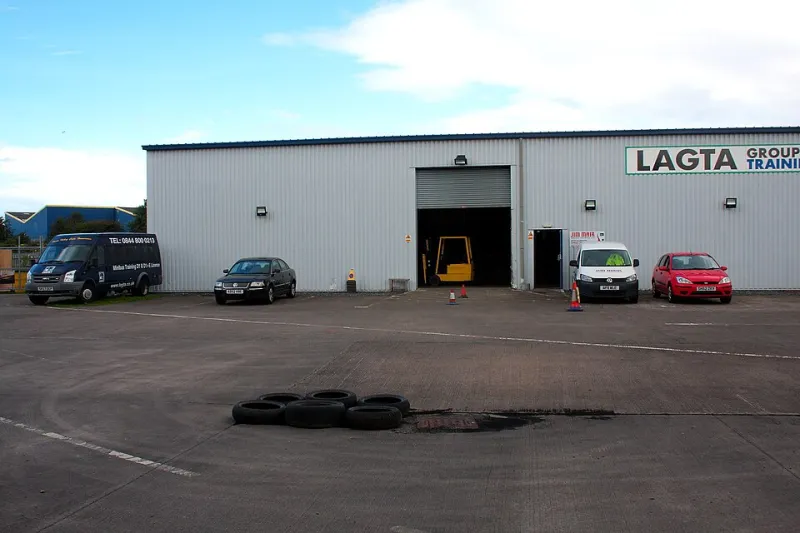
Photo: Ian Rainey , CC BY-SA 2.0, via Wikimedia Commons
The licence wall is not a metaphor. Look at the age profile of counterbalance and reach truck operators across Scotland's industrial belt and the shape of the problem becomes clear. A significant share of the current workforce is within a decade of retirement. The pipeline of new entrants is thin, and the training that produces them is expensive, time-consuming, and unevenly distributed.
The result is a market in which a licensed operator can choose where to work. Sites that compete only on hourly pay will lose to sites that offer predictable shifts, a warm break room, and a visible route to progression. This is an opinion, but it is an opinion shaped by the numbers.
An ageing register
Training providers report cohorts that skew older. Younger workers do not always see warehousing as a career, and the forklift licence is often viewed as a ticket rather than a profession. Apprenticeships and warehousing qualifications exist, but their throughput is small relative to demand. Meanwhile, the experienced operators who can mentor new starters are the same people approaching retirement.
The shortage is not evenly felt. Operators with reach truck experience in narrow-aisle environments are scarcer than counterbalance operators. Sites with older equipment, poor lighting, or difficult yard layouts struggle to attract anyone at all.
Training in-house versus hiring in
In-house training gives control. The site chooses the standard, the instructor, and the timing. It builds familiarity with the specific trucks, the racking, and the building. But it requires a training area, an accredited instructor, and time off the floor. The payback is not immediate, and it is easily undermined if trained operators leave within a year.
Agency supply offers flexibility and speed. It also brings premium rates, variable quality, and a weaker connection to site procedures. For peak-season cover, agency is often the only option. For core shifts, relying on it indefinitely is expensive and fragile.
Accreditation bodies such as RTITB, ITSSAR, AITT, and NPORS provide recognised standards. Refresher training is typically required every three years, alongside site-specific familiarisation. The refresher cycle is a useful planning tool: if a site knows when its licences expire, it can schedule training rather than react to a lapsed ticket.
The real cost of a licence cycle
The course fee is the smallest part of the cost. Add instructor time, equipment, lost production, assessment, and the supervision of a novice. Add the risk that the operator leaves shortly after qualifying. A realistic calculation often shows that an in-house trained operator pays back within a year compared with agency cover, provided they stay.
That proviso is the whole argument. Training without retention is a subsidy to the wider labour market.
Retention is the cheaper lever
Shift patterns matter more than many managers assume. Twelve-hour shifts suit some operators and exclude others. Fixed days, part-time shifts, and school-hours patterns can bring experienced operators back into the workforce. Progression routes matter too: operator to team leader, team leader to instructor, instructor to shift manager. A licence allowance tied to length of service is a simple retention tool.
And then there is the break room. A warm, clean space with proper seating, a decent kitchen, and somewhere to charge a phone is not a perk. It is a signal that the site regards operators as skilled staff rather than disposable labour. In a tight market, signals matter.
A practical response for 2026
Audit the age profile of licensed operators and the expiry dates of their certificates. Calculate the real cost of an agency hour against an in-house trained hour. Build a relationship with a local college or training provider, even if the intake is small. Review break facilities with the same seriousness as racking inspections. And publish a progression route so that a new starter can see where the job leads.
The licence wall is coming. Sites that treat operators as a skilled workforce will get over it. Sites that treat them as a commodity will find that the commodity has gone elsewhere.