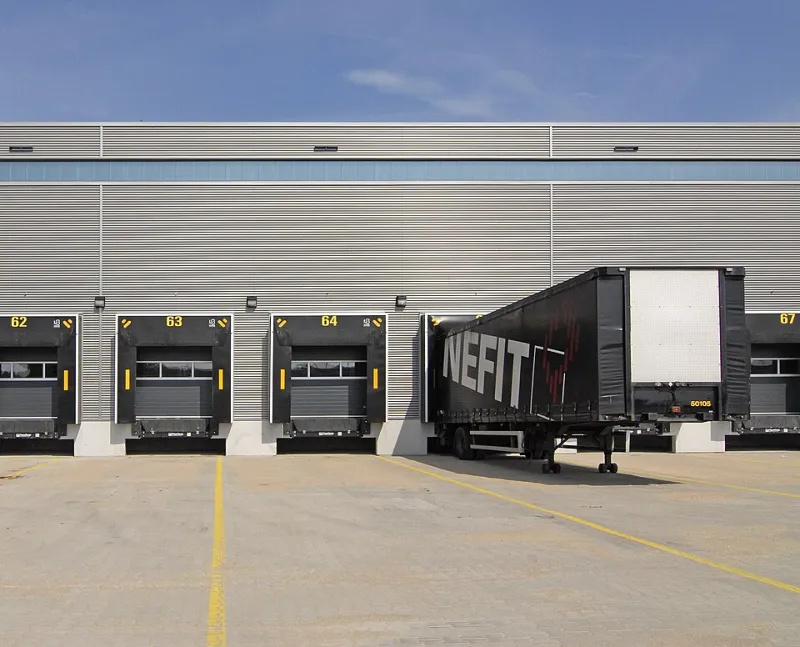
Time at the Gate: Making HGV Turnaround a Measured Warehouse Service
Photo: Richard Webb, CC BY-SA 2.0, via Wikimedia Commons
A driver arrives at 06:00 for a 06:00 booking. By 08:30 the trailer is still in the yard. Inside the warehouse, the morning has been busy and broadly successful. Outside, the haulier has experienced a failed service. Detention charges are the visible cost. The invisible cost is the rate that haulier will quote for the next contract.
Waiting time has long been treated as an unavoidable by-product of warehouse operations. That position is becoming harder to defend. Hauliers price risk, drivers choose employers, and customers notice when deliveries slip because a trailer spent the morning parked. For Scottish sites, where distances are long and alternative hauliers are few, turnaround is now part of the service offering.
Why waiting time is a commercial issue
The haulage market is tight. Drivers are subject to working-time rules, and a two-hour wait at a distribution centre can turn a compliant shift into a difficult one. Rural sites in Aberdeenshire, Ayrshire, or the Borders add travel time that cannot be recovered. A site that routinely detains vehicles will find itself priced accordingly, or quietly avoided.
The warehouse perspective is also fair: late arrivals, incomplete paperwork, and mixed loads disrupt a carefully built plan. The answer is not to assign blame but to measure the whole flow, from gate-in to gate-out, and to publish the result.
Defining the clock
Turnaround must be defined before it can be improved. Gate-in to gate-out is the headline figure, but it is more useful split into stages: arrival to booking, booking to bay allocation, bay to completion of load or unload, and completion to gate-out. Each stage has a different owner and a different fix.
Capture timestamps automatically where possible. ANPR at the gate, a driver check-in app or kiosk, bay sensors, and a handheld confirmation at completion. Paper-based logs are better than nothing, but they tend to record the times people remember rather than the times that happened. Agree the definitions with hauliers so that the numbers mean the same thing on both sides.
A simple scorecard
A weekly scorecard is enough to start. Report median and ninetieth-percentile turnaround by booking slot, by customer, and by bay. Add the percentage of vehicles turned around within sixty minutes, and the total detention minutes beyond any agreed free time. Record reason codes for delay: late arrival, no bay available, documentation query, load not ready, equipment failure.
Averages alone flatter a site. The tail is where the pain sits, and the ninetieth percentile is the number a haulier will recognise. If the median is forty minutes but one in ten vehicles waits three hours, the site has a scheduling or bay-allocation problem, not a general speed problem.
Driver welfare as infrastructure
Facilities for waiting drivers are not a luxury. Access to toilets, hot drinks, shelter, seating, and a phone charger is the minimum. A portacabin with a kettle and a noticeboard is not a rest facility. For rural sites, a decent waiting area is a recruitment aid for hauliers and a practical signal that the site takes the driver's hour seriously.
Communication matters as much as comfort. If a bay is running late, tell the driver before they arrive. A simple text or app notification reduces uncertainty and cuts the number of drivers presenting early in the hope of being seen sooner.
Publishing the numbers
Share a monthly turnaround report with key hauliers. The purpose is alignment, not blame. Where detention is charged, the data should support it, and where it is waived, the reason should be visible. A joint target — for example, ninety per cent of vehicles turned around within ninety minutes — gives both sides something to work towards.
Start with four weeks of baseline data, identify the top three causes of delay, and fix one. Bay allocation rules, staggered booking slots, and pre-arrival document checks are usually cheaper than adding yard space. The site that respects the driver's hour tends to get better rates, better drivers, and fewer surprises. In 2026, that is an operational advantage in Scotland's constrained haulage market.