Lip Service: Auditing Loading Bays Against Scotland's Mixed Trailer Fleet
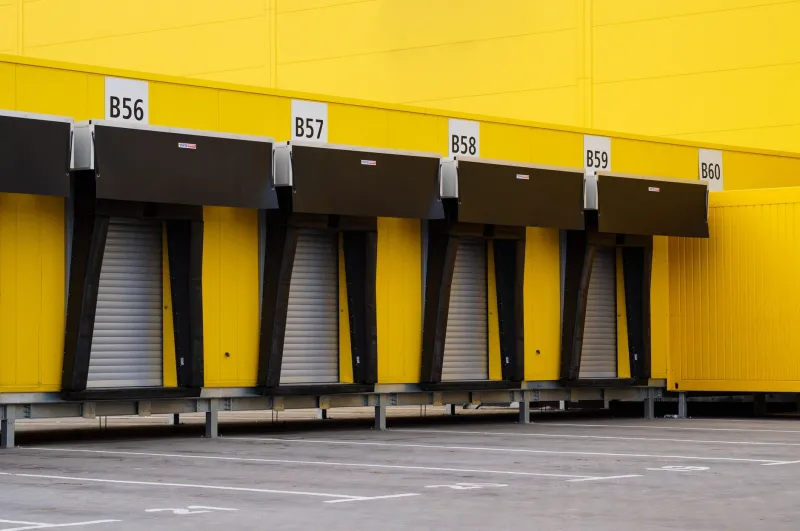
The loading face is the most negotiated square metre in any warehouse. It is where a trailer's bed height meets a concrete slab, where a driver's routine meets a site's schedule, and where a piece of steel barely half a metre long decides whether a vehicle is turned around in twenty-five minutes or ninety. In Scottish warehousing, that negotiation has become harder. Fleets have diversified while many estates have not, and the gap between what a bay was designed to accept and what actually reverses onto it is now a routine source of friction.
A Fleet That No Longer Matches the Drawing
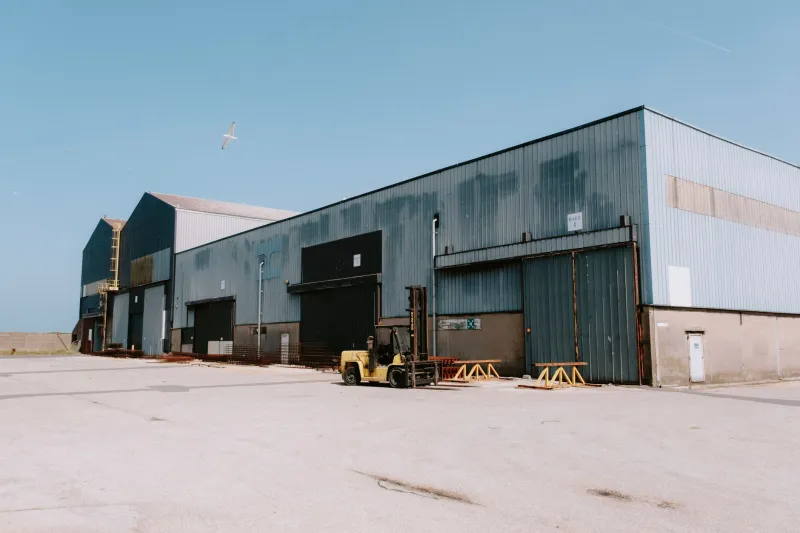
Many Scottish industrial estates were laid out when the dominant vehicle was a 13.6-metre curtainsider with a bed height somewhere near 1.1 metres. That assumption still holds for a large share of arrivals, but it no longer describes the whole picture. Double-deck trailers, longer semi-trailers, refrigerated boxes, 7.5-tonne rigids with tail-lifts, parcel vans and the occasional 3.5-tonne vehicle all present at the same doors. Each brings its own bed height, its own suspension behaviour and, in the case of tail-lift vehicles, a fundamentally different unloading method.
The result is a loading face that works well for the majority and badly for a persistent minority. That minority is expensive. It absorbs yard time, generates damage claims against leveller lips and trailer beds, and occasionally produces the kind of near-miss that prompts a review of everything.
Reading the Lip: What the Numbers Mean
A dock leveller is specified by its operating range, its lip length and its load rating. A typical unit might cover roughly 300 millimetres either side of a nominal dock height of 1.1 metres, with a lip of 400 to 500 millimetres. Those figures are generous for a laden curtainsider and marginal for a lightly loaded trailer riding high on its air suspension. They are irrelevant to a tail-lift, which needs either a level apron or a ground-level door, because the platform must descend to ground rather than bridge to a raised dock.
Bed height also moves during the shift. A trailer that arrives laden sits lower than the same trailer after unloading; raising or lowering air suspension changes the interface again. A leveller that copes at 09:00 may be struggling by 15:00. This is the practical meaning of the divide: not a single mismatch, but a shifting envelope that the bay either accommodates or does not.
Building a Bay-Compatibility Matrix
The most useful output of an audit is a simple grid. Along one axis, list every bay with its dock height, leveller range, lip length, door width, shelter type and rated capacity. Along the other, list the vehicle types that actually arrive, with laden and unladen bed heights, tail-lift presence, deck configuration and typical wheelbase. The intersection is not a yes-or-no answer but a margin.
Getting the vehicle data right requires more than a glance at the carrier list. Appointment records rarely capture body type, and subcontracted vehicles are the usual source of surprise. A two-week sample of arrivals, checked at the door rather than at booking, will usually identify the handful of vehicle types responsible for most of the awkward moments. From there, the matrix can distinguish between bays that are genuinely universal, bays that are fine for standard curtainsiders, and bays that should be reserved for ground-level or tail-lift work.
Safety at the Interface Is Not a Signage Issue
The loading face is a live interface between a vehicle that can move and a person who often cannot see the danger. Trailer creep, lip catch on a tail-lift platform, unsupported overhang and gaps between lip and bed are all familiar failure modes. So are wheel chocks that are present but not used, and communication lights that are followed by habit rather than procedure.
Scottish weather adds its own variables. Wind loading on dock shelters, rain on steel, and the practical difficulty of securing a trailer in a yard exposed to the east coast or the prevailing south-westerly all argue for a written routine rather than an informal one. Restraining devices, wheel guides and clear bay markings do more for safety than another warning sign, but only if the audit confirms they suit the vehicles using the bay. A restraint designed around a standard artic may be useless for a rigid with a tail-lift.
When Scheduling Beats Steel
Capital projects are not the only answer. Where the mismatch is concentrated in a small number of vehicles, a scheduling response can be cheaper and quicker. Designating one or two bays as mixed-use, holding standard bays for curtainsiders, and capturing vehicle type at the booking stage rather than at the gate will reduce conflict without touching the fabric of the building. Staggering appointments by vehicle type is unglamorous but effective.
The limit of scheduling is peak. When volumes rise in the autumn, the buffers that made a flexible arrangement work tend to disappear, and the awkward vehicles arrive whenever they can. A schedule that depends on spare capacity is not a permanent solution, but it can buy the time needed to specify a retrofit properly.
The Retrofit Case, Priced Honestly
Where capital is justified, the options run from replacing a leveller with a longer lip or wider operating range, through adding dock shelters and restraints, to creating a level-access door with a ramp or scissor lift. Costs vary widely with structural opening, floor slab condition, drainage and canopy, and older Scottish estates can present complications that a new-build would not. The payback case rests on reduced dwell, fewer damage claims and safer operations, and it should be tested against those figures rather than against a general desire for modernity.
Three Questions for 2026
First, is the friction concentrated or diffuse? A handful of vehicles causing most of the difficulty points towards scheduling or a targeted retrofit; a broad mismatch suggests the loading face itself needs rethinking. Second, is the cost of failure measured in time or in safety? The latter changes the priority. Third, will the fleet stand still? Longer semi-trailers, electric rigids with different weight distribution and the continued growth of tail-lift deliveries all suggest it will not. An annual bay audit, repeated as the fleet changes, is a modest habit that keeps the loading face honest.