From Gantry to Goods: The Case for Reactivating Scotland's Rail-Linked Warehousing
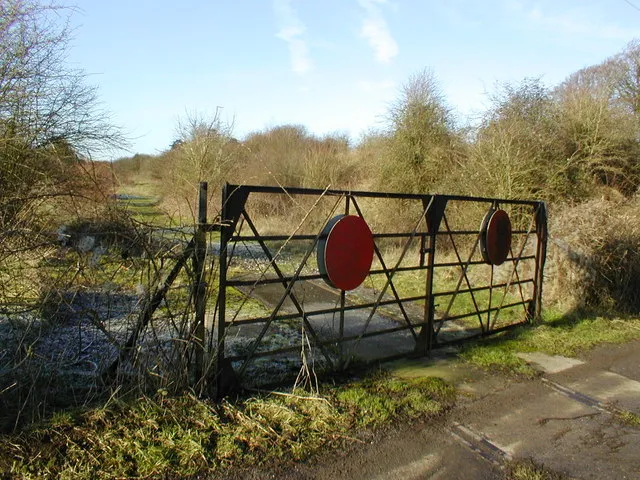
Photo: Patrick Pavey, CC BY-SA 2.0, via Wikimedia Commons
A railway siding is an awkward thing to ignore. It runs across a yard, cuts through a fence line, and ends at a loading bank that may no longer be used. For many Scottish warehouse operators, such infrastructure is simply part of the inherited estate: a reminder of a time when freight arrived by wagon rather than by articulated lorry. Yet as pressure grows on road capacity, carbon reporting and site efficiency, the question of whether these dormant connections could be brought back into productive use is being asked with renewed seriousness.
A legacy written in steel
Scotland's industrial geography was shaped around rail. The Central Belt, in particular, retains a dense pattern of former goods yards, branch lines and private sidings serving sites around Mossend, Coatbridge, Grangemouth, Bellshill and the Clyde corridor. Many of the warehouses built alongside them were designed with rail access in mind, even if the flow of goods later shifted decisively to road.
The result is a mismatch between inherited assets and current operations. A site may have a siding that is physically intact but effectively landlocked by later development, or a loading dock that no longer aligns with modern trailer heights and pallet configurations. In other cases, the connection survives only as a short stub, severed from the wider network by a removed junction or a redeveloped approach.
Why the links fell quiet
The drift away from rail was not irrational. Road haulage offered flexibility, door-to-door service and a delivery pattern suited to smaller, more frequent orders. As just-in-time inventory took hold, warehouses were configured around rapid road dispatch rather than block trains. Many Scottish sites also found themselves handling a greater variety of stock in smaller quantities, which sits awkwardly with rail's economics of scale.
The commercial context has since shifted again. The rebalancing towards just-in-case inventory, evident in 2026 as operators hold more buffer stock to guard against supply disruption, has increased storage requirements and, in some cases, lengthened dwell times. That does not automatically make rail viable, but it does change the arithmetic. A site holding more stock for longer may be better placed to absorb the larger consignments that rail tends to require.
The operational case, weighed honestly
Rail works best where flows are predictable, volumes are substantial and the origin and destination are both rail-connected. For a Scottish warehouse receiving containerised imports through a port, or dispatching bulk or palletised goods to a major distribution hub in England, a reinstated siding could remove a meaningful number of lorry movements from the road network.
The benefits are not confined to transport cost. Fewer road movements can ease yard congestion and reduce pressure on loading bays, particularly where a site handles high volumes at peak periods. Rail also offers a degree of resilience against driver shortages and road disruption, though it introduces its own vulnerabilities around network capacity, timetabling and terminal handling.
The counterargument is equally practical. Modern just-in-case operations depend on late changes to orders, precise delivery windows and the ability to redirect stock at short notice. Rail is less accommodating on all three counts. Unless a warehouse has sufficient storage to hold rail-delivered stock and break it down for onward road distribution, the siding risks becoming an expensive piece of unused infrastructure rather than a working asset.
Planning and the physical audit
Before any commercial case can be tested, the physical and planning position must be established. A dormant siding may still be legally connected to the network, but its condition is another matter. Track, drainage, level crossings, signalling and lineside vegetation all require inspection. In some cases, the land around the siding has been sold or redeveloped, leaving no practical route for wagons to reach a loading point.
Planning authorities in Scotland have shown increasing interest in freight consolidation and the protection of rail-connected land. However, reactivation is rarely a straightforward consenting exercise. It may engage transport appraisal, environmental assessment and local development plan policy. Operators considering a revival should expect a period of technical due diligence before any commitment is made, and should involve network infrastructure bodies at an early stage.
Cost, funding and the commercial model
The capital cost of restoring a siding can be considerable, and it is rarely borne by the warehouse operator alone. Track renewal, terminal equipment, safety systems and access works all carry significant price tags. Funding may come through a combination of private investment, freight facility grants and regional development support, but the application processes are competitive and require a clear demonstration of enduring commercial demand.
A more realistic model for many sites is a shared or multi-user facility. Rather than each warehouse restoring its own connection, a consolidated rail terminal serving several operators can spread the fixed cost and provide the frequency needed to make rail attractive. Such arrangements exist elsewhere in the UK and could be replicated in parts of Scotland where sites cluster around a common corridor.
Carbon and the just-in-case counterargument
Decarbonisation is a genuine part of the case. Rail freight produces substantially lower emissions per tonne-kilometre than road haulage, and shifting even a modest proportion of long-distance movements onto rail can contribute to an operator's scope 3 reduction targets. For companies reporting under UK frameworks, that can matter commercially as well as environmentally.
Yet carbon is not the deciding factor. A rail link that is used sporadically, or that requires road feeder journeys at both ends, may deliver a smaller net benefit than expected. The environmental case is strongest where rail replaces long-distance trunking rather than local distribution. Operators should model emissions across the whole journey, not just the rail leg.
A staged route back
The most credible approach is incremental. A site might begin by assessing whether an existing connection can support occasional block trains or a seasonal flow, using temporary handling arrangements before committing to permanent infrastructure. Others may find that a nearby railhead, served by road, offers a more proportionate first step than full sidings reinstatement.
For Scottish warehousing, the rail question is ultimately a portfolio question rather than a universal one. Some sites will never justify reactivation. Others may find that a dormant connection, properly assessed and commercially anchored, becomes a useful hedge against road capacity constraints and a differentiator for customers with long-distance flows. The case is not that rail should replace road, but that a small number of well-chosen links could add resilience to a system that currently depends almost entirely on it.