Watts in the Fine Print: Auditing Submetering on Multi-Let Scottish Industrial Estates

Photo by Photo by PJ Wallace on Unsplash on Unsplash
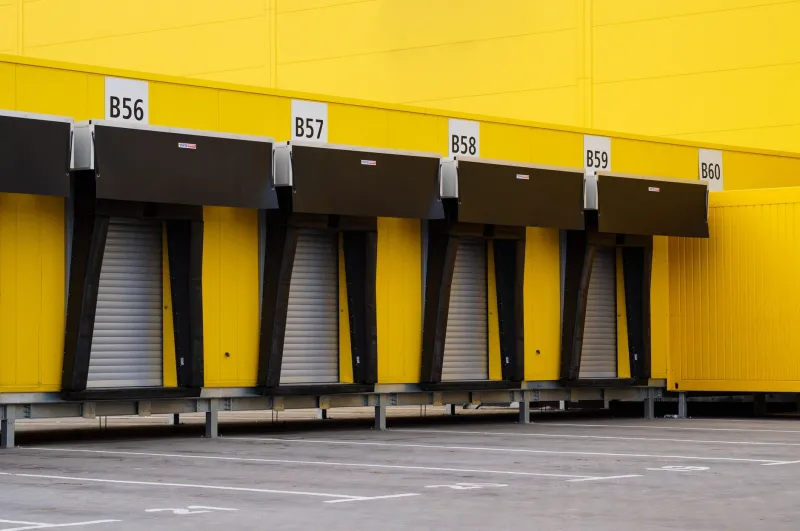
A single high-voltage supply, a substation behind a palisade fence, and a row of units let to different occupiers: this is the standard arrangement on industrial estates across the Central Belt, from the older stock around Bellshill and Newbridge to the newer sheds at Eurocentral and Livingston. It works well enough as engineering. As a commercial arrangement, it is considerably less tidy, because the occupier rarely buys its electricity from a supplier at all. It buys it, indirectly, from its landlord — through a service charge line usually labelled something like "electricity recovery" or "utilities recharge".
When that line is modest, nobody examines it closely. When it is not — and for a chilled or high-throughput operation it rarely is — the questions begin: is the submeter accurate, is the apportionment defensible, and what exactly is being recovered?
Why shared infrastructure invites disagreement
An estate with one half-hourly import meter and eight occupiers cannot bill any of them on the basis of a supplier invoice. It must divide a single bill by some method, and every method is a compromise. Floor area is the most common denominator because it is the easiest to evidence and the least likely to be challenged. It is also, in operational terms, close to meaningless: a 5,000 sq ft unit running three shifts of forklift charging bears no resemblance, in load terms, to an identically sized unit storing bagged aggregates.
Layered on top are the costs that never appear on a domestic bill — capacity charges, fixed standing charges, reactive power penalties where power factor correction has been neglected, and the landlord's own consumption for yard lighting, gatehouses and shared welfare facilities. All of it has to land somewhere.
Reading the meter rather than the invoice
The first stage of any audit is physical rather than financial. Submeters installed on multi-let estates should be MID-approved, and where current transformers are used, the ratio must match what is recorded in the meter's configuration. A CT ratio entered at 200/5 when the installed transformers are 400/5 will halve every reading the meter produces, and nothing on the invoice will look wrong.
Equally common are the quieter faults: a meter that has drifted out of calibration, a unit supplied through a meter registered to a neighbouring occupier, or a distribution board altered during a fit-out without the metering being revisited. These errors persist for years precisely because the numbers appear plausible.
Practical assurance comes from comparison. A check meter installed for a four-week period on the incoming tails of a unit, read against the landlord's submeter over the same window, will expose most persistent discrepancies. Where half-hourly data is available, a profile comparison is still more revealing: a unit whose recorded consumption does not fall away over a shutdown period is either not being metered correctly or is being metered alongside something else.
Apportionment: area, load or measured use
Once the meter is trusted, the method must be examined. Three broad approaches are in use:
- Area-based apportionment, simple and stable, but indifferent to how the building is operated.
- Maximum-demand or kVA-based apportionment, which reflects the capacity each occupier's plant imposes on the shared supply and is generally fairer where heavy machinery or refrigeration is involved.
- Measured consumption, where each unit is individually sub-metered and recharged on actual units used, with only the landlord's own consumption and losses apportioned by area.
Measured consumption is the most defensible where the metering supports it, and it is increasingly what occupiers expect. What matters most, however, is that the lease says clearly which method applies, that the method is described in the service charge budget, and that it has not been changed partway through a year without explanation. Silent switches between methods — area in the budget, maximum demand in the reconciliation — are a reliable source of disputes.
The electric vehicle problem
Vehicle charging has complicated matters quickly. A bank of chargers installed at a landlord's expense to serve a shared yard draws power through the landlord's meter, and the cost must be recovered. But charging demand is spiky and unevenly distributed: a tenant running four vans overnight places a very different burden on the supply from one whose staff occasionally top up a single car.
Occupiers should press for charge point consumption to be metered separately and recharged on measured use, rather than blended into a general pot and shared by floor area. Where chargers are tenant-installed, the lease should be equally clear about who owns the load, who is responsible for reinforcement costs if the supply reaches its agreed capacity, and whether the landlord may recover for infrastructure provided in anticipation of demand that the tenant has not created.
Water, drainage and the less visible lines
Electricity tends to dominate attention, but Scottish Water charges, surface water drainage and any trade effluent consent carry their own apportionment questions. Trade effluent in particular is easy to misattribute: a unit washing down floors or operating a vehicle wash is discharging a load that a dry storage operation is not, yet both may be sharing a drainage recovery calculated on area. Occupiers with a trade effluent consent should check that the consent, the sampling and the charges are attributed to them alone.
A checklist before renewal
- Obtain the lease clauses on service charge, apportionment and audit rights, and read them against the current budget.
- Request the estate's meter register: meter serial numbers, locations, MID certificates and CT ratios.
- Ask for the schedule of apportionment, with the calculation shown for each occupier.
- Compare twelve months of half-hourly data with operational records — shift patterns, shutdowns, seasonal peaks.
- Commission a check meter where readings and operations diverge.
- Separate out landlord consumption, shared lighting and yard services.
- Confirm how EV charging, both landlord and tenant installed, is metered and recharged.
- Verify water, drainage and trade effluent attribution separately from electricity.
- Establish benchmarking: kWh per pallet position or per square metre, compared across years, not across sites.
Reconciling, and if necessary disputing
Reconciliation should follow the evidence, not the invoice. Where a discrepancy is found, the practical route is a written query to the managing agent setting out the meter data, the identified fault and the period affected, with a proposed adjustment. Most errors are arithmetic or administrative and are corrected without escalation.
Where agreement is not reached, the lease governs. Service charge disputes in Scotland are shaped principally by the terms of the lease rather than by the statutory consultation regime that applies south of the border, so the arbitration or expert determination clause, and any express audit right, become the decisive documents. An independent surveyor appointed under that clause can usually resolve a metering or apportionment question at a fraction of the cost of litigation — provided the occupier has preserved the underlying data.
That is the argument for acting early. A submetering audit conducted six months before renewal gives an occupier time to correct a faulty meter, renegotiate a methodology and, where necessary, negotiate the cost of remediation into the new rent. Conducted afterwards, the same findings become a complaint about a closed year. The meter, after all, belongs to the landlord; the evidence needs to belong to the tenant.