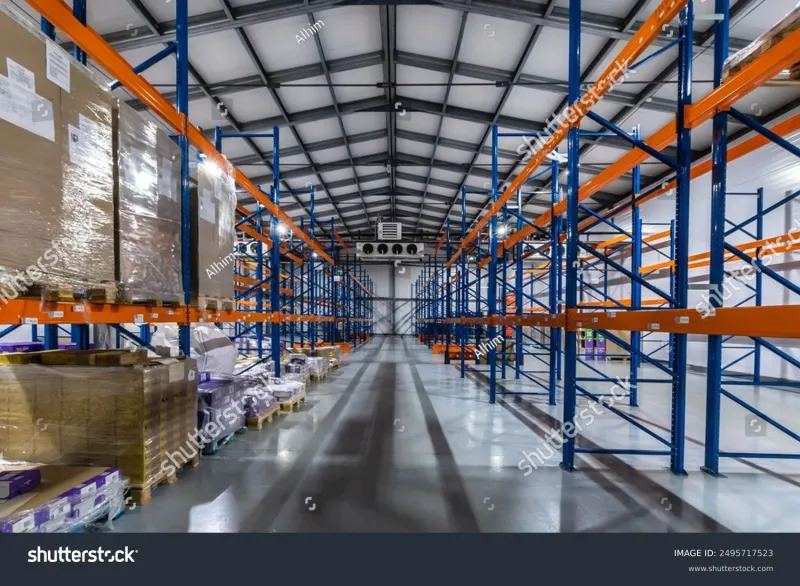
Dormant Pallet Positions: Reclaiming Capacity from Scotland's Slow-Moving Stock
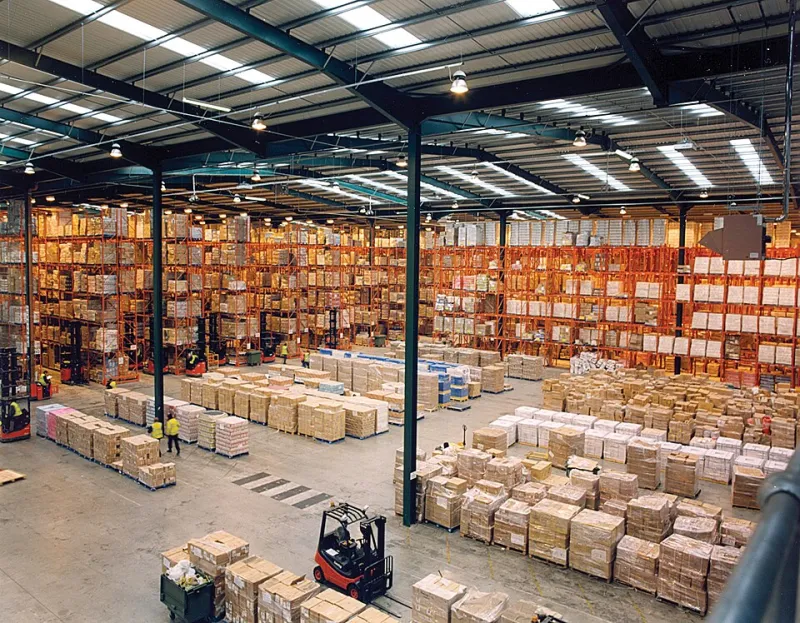
Photo: Axisadman, CC BY-SA 3.0, via Wikimedia Commons
Every warehouse manager has had the conversation. The site is full, pick rates are slipping, new lines cannot be onboarded, and the obvious answer appears to be more racking or another building. Yet a walk of the aisles frequently tells a different story: whole bays of product that have not been touched since the last stocktake, occupying prime positions because nobody has been given the job of moving them on.
The empty aisle problem is not really a space problem. It is a governance problem dressed up as a capacity problem, and it is best solved in that order.
What Dormant Stock Actually Costs
The true cost of a slow-moving pallet is rarely captured by rent alone. It accumulates across several lines of the P&L at once:
- Occupancy. Cost per pallet position is the visible number, but the more useful figure is cost per cubic metre. Aisle widths, beam heights and part-filled pallets mean that poorly utilised cube is often the larger loss.
- Labour. Dormant stock is counted, moved, re-counted and moved again. Every housekeeping exercise spends hours relocating product that will not be sold this quarter.
- Working capital. The cash tied up in the stock is unavailable for lines that turn.
- Obsolescence and shrinkage. The longer it sits, the more likely it is to be damaged, superseded by a new model or quietly written off.
- Opportunity cost. The pallet position that cannot be given to a fast-moving line is a sale not made, and it is almost never recorded anywhere.
Presented together, these figures usually transform the conversation from a request for more space into a case for a clearance programme.
Define Before You Purge
The temptation is to start with a skip. Resist it. Begin by agreeing definitions, because Scotland's product mix is seasonal in ways that punish crude rules. Garden and outdoor lines, agricultural supplies, ski and winter equipment, festival and events stock, and Christmas ranges all sit still for months legitimately.
A workable framework combines velocity and variability. Rank SKUs by number of picks in a rolling period, then by the variability of that demand. A line picked twice a week every week is a different animal from a line picked forty times in a fortnight each August. Set explicit ageing thresholds — commonly 90, 180 and 365 days without movement — and define slow-moving and obsolete separately, with a named owner for each list.
SKU Rationalisation Is a Commercial Exercise
Warehouse teams can produce the data, but they should not be left to make the decision. The long tail of any catalogue is a commercial question: which lines justify the space they occupy, which can be substituted by another pack size, which need a higher minimum order quantity agreed with the supplier, and which should be delisted entirely.
A useful discipline is to present the commercial team with the tail ranked by space consumed rather than by sales value. A line generating modest revenue but occupying six pallet positions for eleven months tends to look very different when the two figures sit side by side.
Slotting: The Cheapest Capacity You Already Own
Before any stock is removed, review where the stock sits. Slotting drift is relentless: lines change velocity, pick faces stay where they were configured two years ago, and the golden zone quietly fills with product that no longer deserves it.
A quarterly slotting review should examine pick frequency against location, the size of the pick face relative to replenishment frequency, and the number of pallets that have been top-and-tailed into part-filled positions. Consolidating part pallets alone frequently releases five to ten per cent of occupied positions. Re-palletising to standard heights, checking beam levels, and using the full cubic capacity of the rack rather than the convenient lower levels will do more for capacity than most capital projects.
Returns: The Aisle Nobody Owns
Returns areas are where dormant stock breeds. Product arrives without a decision, sits in quarantine because no one is accountable, and becomes aged stock by default.
Put a clock on it. Every returned item should receive a grading decision and a routing decision within a fixed period — restock, refurbish, resell through a secondary channel, donate or recycle. Anything that requires a decision from another department should escalate automatically at the end of that period rather than waiting for someone to notice.
Clearance With Discipline
Clearing stock without destroying margin requires a ladder rather than a single markdown. A typical sequence moves from a modest reduction through bundling and multi-buy offers, then pallet-lot sales to trade buyers or jobbers, then auction, and finally disposal. The later stages should be pre-approved in principle so that ageing stock does not stall while a discount is negotiated.
Disposal itself carries obligations and reputational considerations. Waste regulations apply to much of what a warehouse would otherwise discard, and donation to charitable or community organisations is often both simpler and more useful than it first appears — provided the product is genuinely fit for purpose and the arrangement is documented.
Making It Stick
A one-off clearance buys a quarter's breathing space. A programme keeps it. The essentials are modest:
- A monthly report showing pallet positions occupied by stock with no movement in 90, 180 and 365 days.
- A named owner for the slow-moving list, with authority to escalate.
- Two or three headline measures — cube utilisation, returns ageing, and the proportion of positions held by non-moving stock — reviewed alongside pick performance rather than as a separate housekeeping item.
- Reporting pulled directly from the warehouse management system, so that the figures are not assembled by hand and quietly abandoned in a busy month.
The Point of It All
Capacity reclaimed from dormant stock is capacity that costs nothing to acquire, carries no rent review and can be given back to the lines that generate revenue. For Scottish operators facing pressure on both occupancy costs and service levels in 2026, the most reliable source of new space is usually the space already on the floor plan — occupied by product nobody has yet been asked to move.