Kilowatt Harvest: Making Scottish Warehouse Roofs Earn Their Keep
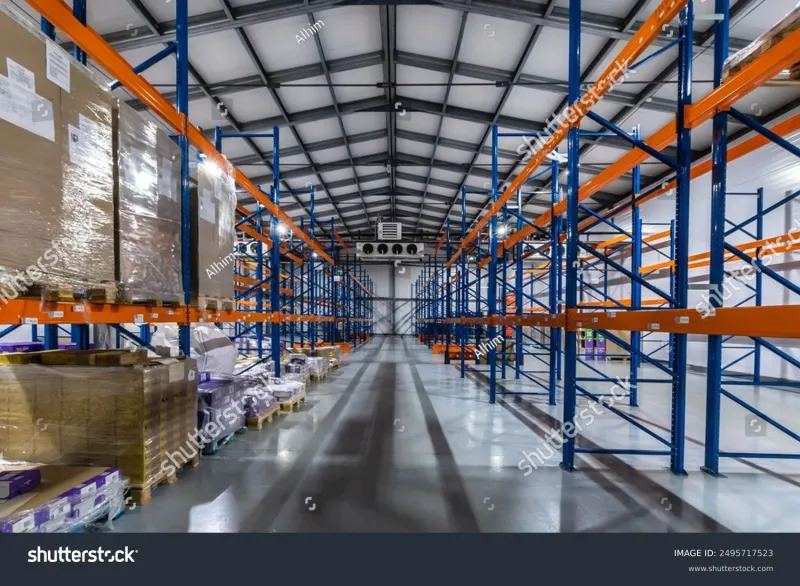
Walk the perimeter of almost any Scottish distribution centre and the same feature presents itself: several thousand square metres of roof doing nothing except keeping the rain out. Meanwhile, the electricity bill for lighting, refrigeration, conveyors and forklift charging arrives every month without fail.
The idea that these two facts belong in the same conversation is not new. What has changed is the economics, the technology and — importantly — the regulatory framework that surrounds on-site generation and storage. For operators weighing capital against return, the question is no longer whether rooftop energy makes sense in principle, but whether it makes sense on this particular site, at this particular scale, under this particular connection agreement.
Begin with the roof, not the inverter
The most common error in early-stage appraisal is to size the array from the electricity bill. A better starting point is structural and practical suitability.
Age and construction matter. A portal-frame building from the 1990s with a standing-seam or composite panel roof is a different proposition from a fragile older profiled sheet covering approaching the end of its service life. If the roof will need replacement within a decade, it is generally wiser to sequence the works — install the covering first, then the array — rather than to mount modules on a surface that will have to come off.
Load capacity, fixing method, roof pitch, orientation and — critically in Scotland — snow and wind loading all require assessment by a structural engineer familiar with the building. A roof that has already been overlaid with rooflights, ventilation plant and access walkways will offer less usable area than the gross footprint suggests. Realistically, operators should expect somewhere between half and three-quarters of the total roof area to be genuinely available.
Shading deserves particular attention in an industrial setting. Chimneys, adjacent buildings, future extensions and the cranes that appear during a plant upgrade can all compromise yield, and a partially shaded string underperforms disproportionately.
What a Scottish roof actually generates
Scotland's solar resource is often underestimated by operators who picture long winter days. A well-oriented, unshaded array in the central belt will typically produce in the region of 800 to 950 kilowatt hours per installed kilowatt peak each year, with the east coast performing slightly better than the wetter west and higher-altitude sites slightly worse. That is roughly three-quarters of the yield of a comparable array in southern England — but it arrives against a Scottish electricity price that frequently exceeds the UK average.
For a site with a meaningful daytime load, self-consumption is the dominant value driver. Every kilowatt hour used on site displaces a unit bought at the site's import rate, which for a half-hourly metered industrial customer will include significant non-commodity charges. Export, by contrast, earns a much lower rate. The design objective, therefore, is to match generation to demand as closely as possible — which usually argues for a smaller array fully consumed on site rather than a larger one exporting at wholesale.
Batteries: three distinct business cases
Storage is frequently bundled into solar proposals as though it were a natural appendage. It is better understood as a separate decision with its own justifications.
Peak shaving. Where a site's maximum demand sets a substantial capacity charge, a battery discharging during peak periods can trim the top of the load profile and reduce that charge month after month. This is often the most reliable route to a return in warehousing, where demand peaks are predictable.
Resilience. For operations handling temperature-sensitive goods, pharmaceutical lines or high-value stock, storage paired with a suitable transfer arrangement can bridge short interruptions. It is not a substitute for a generator in a long outage, but it will carry a site through most network faults.
Arbitrage and flexibility services. Time-of-use tariffs and demand-side response arrangements offer additional revenue, though the value of these streams has become less predictable as more capacity joins the market. Operators should treat them as upside rather than as the foundation of the case.
Containerised lithium systems are the norm at this scale, and siting requires thought: separation distances, fire safety provisions, thermal management and access for maintenance all have to be designed in, and insurers will want to be consulted early rather than informed late.
The grid connection is usually the long pole
For many Scottish sites the limiting factor is not roof, capital or appetite but the distribution network operator's queue. Connection timelines have lengthened considerably in areas where network capacity is constrained, and a site that assumed it could simply add generation may find itself offered a date several years out, or a costly reinforcement requirement.
There are mitigations. A zero-export or export-limited connection can sometimes be secured more quickly and cheaply than an unrestricted one, and where the business case rests on self-consumption rather than export, accepting an export limitation costs little. Early dialogue with the DNO — before committing to a contractor or a module count — is essential. Where a site already has spare capacity in its existing supply, that headroom should be confirmed in writing.
Planning and landlord considerations
Rooftop solar on a non-domestic building generally falls within permitted development, subject to limits on the equipment's height above the roof plane and to the building not being a listed structure or in a sensitive location. Battery installations and any new plant enclosure are a different matter and may require formal consent. Conservation areas and World Heritage sites in Scotland warrant particular caution.
Where the building is leased, the position is contractual as much as regulatory. Rooftop rights, reinstatement obligations, the treatment of the installation at lease end and the division of any export revenue all need to be settled in writing. Landlords are increasingly receptive, but assumptions are a poor substitute for a side letter.
Phasing without stopping the forklifts
A working warehouse cannot be shut for a fortnight while a contractor works the roof. Sensible phasing addresses this directly.
- Survey and structural sign-off during normal operations, with any intrusive inspection scheduled around peak periods.
- Enabling works — cable routes, switchgear and a new distribution board — installed first, often during planned shutdowns.
- Array installation in zones, coordinated with racking layouts and roof access so that no more than a manageable proportion of the roof is disrupted at once.
- Battery and controls commissioned last, once metering and monitoring are proven, so that the first months of generation data can inform how storage is dispatched.
- Review at twelve months, comparing modelled yield against actual, and adjusting tariff or dispatch strategy accordingly.
Testing the numbers before committing
A credible appraisal will model capex — typically a six-figure sum for a mid-sized array, with storage adding materially — against a realistic self-consumption ratio rather than an optimistic one. It will use the site's actual half-hourly data, not a generic load profile. It will account for degradation, inverter replacement, insurance and cleaning. And it will stress-test the case against a lower export price and a higher interest rate than the sales proposal assumes.
Do that honestly, and the answer will vary from site to site. But for a Scottish warehouse with a daytime load, a sound roof and a landlord who can be brought onside, the question is worth asking properly.