Duty Suspended, Options Open: Customs Warehousing's Quiet Revival in Scotland

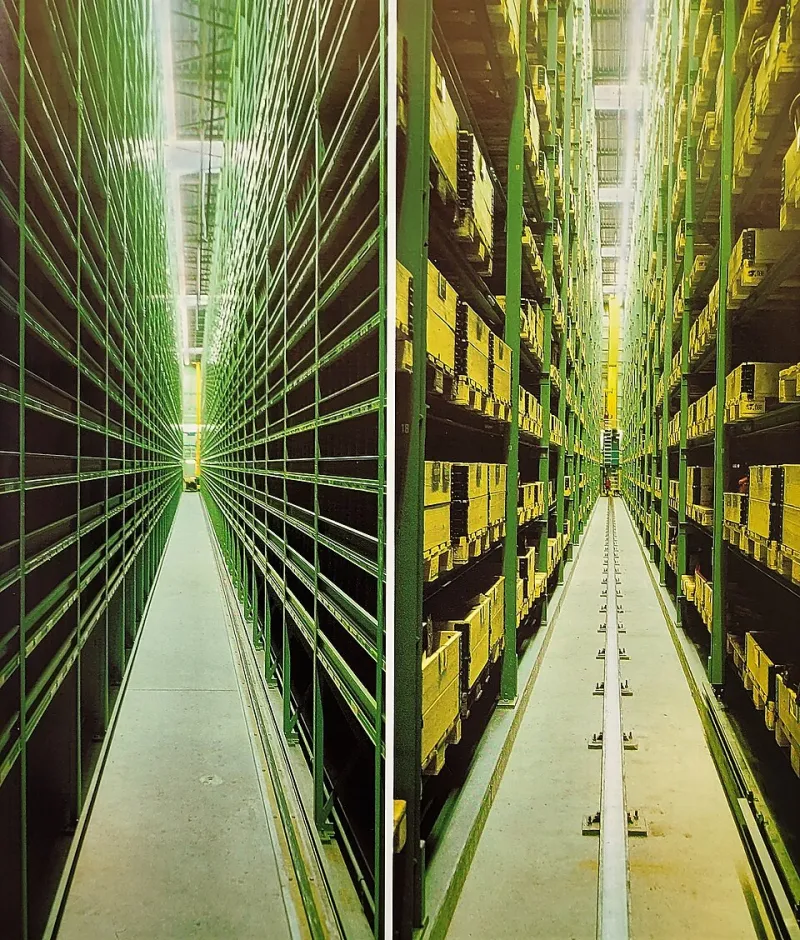
Photo: Calistemon, CC BY-SA 4.0, via Wikimedia Commons
For much of the past decade, the customs warehouse occupied an odd position in the Scottish logistics landscape: widely respected, rarely adopted. Larger 3PLs held authorisations as a matter of course, but for many mid-sized importers the appeal of suspending duty and VAT was outweighed by the compliance overhead and the perceived inflexibility of a designated site. That calculation is being revisited.
Trade flows into Scotland have become more varied. Consignments that once moved in predictable, high-volume cycles now arrive in smaller and less regular batches, while export customers expect shorter lead times and greater visibility. Where stock sits still for weeks, the case for duty suspension weakens. Where it is held, blended, re-labelled or redistributed before onward sale, the arithmetic changes considerably.
Why the numbers look different now
A customs warehouse allows goods to be stored with import duty and import VAT suspended until they are released into free circulation, re-exported or moved onward under a different procedure. For a business holding stock for months rather than days, that deferral is working capital that stays on the balance sheet.
Three pressures have sharpened the argument. First, finance costs remain materially higher than the era of near-free borrowing, so any reduction in duty outlay carried across a stock cycle is worth more than it once was. Second, the range of goods arriving with complex origin or preference questions has widened, making the ability to hold stock while documentation is resolved genuinely useful rather than merely tidy. Third, the maturation of the Customs Declaration Service and the wider ecosystem of customs software has made record-keeping less artisanal than it was when the old system demanded bespoke arrangements.
It is worth being precise about what suspension does not do. It does not remove duty liability; it postpones it. It does not exempt a business from safety and security declarations, nor from the border controls that now apply to a broader range of imported goods. Operators who treat authorisation as a route around compliance tend to discover, fairly quickly, that HMRC's audit function is not decorative.
Freeports are not the only answer
Scotland's two Green Freeports — the Inverness and Cromarty Firth site and the Forth site — have attracted much of the attention, and justifiably so. Their combination of customs sites, tax reliefs and co-located port infrastructure suits high-volume, port-centric operations handling goods that move on quickly.
Yet the majority of Scottish warehousing stock is not inside a freeport boundary and will never be. Independent sheds in the central belt, in Aberdeenshire or in the Borders can hold a standard customs warehouse authorisation perfectly well. What matters is not proximity to a designated site but the practical geometry of the operation: how far goods travel from the port of arrival, how long they linger, and whether the site can be made secure and auditable without strangling throughput.
A smaller operator considering the step should weigh the fixed costs honestly. Guarantees, systems, training, stock reconciliation and the occasional specialist advice all carry a price. Below a certain volume of suspended duty, those costs can comfortably exceed the benefit — and a warehouse that applies for authorisation before it has the throughput to justify it is storing up a compliance burden it will resent.
What HMRC will actually ask
The authorisation process rewards preparation and punishes optimism. Applications tend to falter on the same handful of points.
- Stock records and reconciliation. Can the site demonstrate, at any given moment, exactly what is held under suspension, where it came from and what its status is? Spreadsheet-and-goodwill arrangements rarely survive scrutiny.
- Physical controls. Segregation of suspended goods, whether by physical demarcation or a robust location-management system, needs to be describable in plain terms and demonstrable on a site visit.
- Guarantee and financial standing. The level of guarantee required depends on the duty at risk; applicants should model this before committing rather than after.
- Competence and named responsibility. Someone credible must own the process. Delegating customs to whoever happens to be on shift is the most common precursor to a messy audit.
- Premises security. Access control, CCTV and perimeter arrangements are assessed as part of the suitability of the site.
The location question
Scotland's geography imposes its own logic. A site serving the central belt can plausibly hold stock and distribute across the UK within a day, which suits suspended goods awaiting a decision about their final market. Sites further north face longer inland legs to the major English consumption centres, though the trade-off in rent and labour availability can still be favourable for goods destined primarily for Scottish customers or for export via northern ports.
Rail-linked and port-adjacent options deserve particular attention where volumes justify them, but the decisive factor is usually simpler: the distance between the quay and the racking, and the number of times goods must be handled in between.
A practical pre-application checklist
- Model the duty and VAT actually at risk across a full stock cycle, not a peak week.
- Map every goods movement the site performs and identify where suspension genuinely adds value.
- Confirm the warehouse management system can hold and report customs status at location level.
- Identify a named responsible individual with the authority to stop a dispatch.
- Budget for the guarantee, systems change and ongoing advisory support.
- Speak to HMRC early; the customs helplines and the authorisation teams are more receptive to a well-prepared enquiry than to a completed application built on assumptions.
Customs warehousing is not a shortcut and it is not a status symbol. It is an operating model that suits a particular shape of trade: stock that is held, blended and redirected rather than moved straight through. For Scottish operators whose profile now matches that description more closely than it did five years ago, the case is worth a fresh hearing.